Govern and analyse your first automation
Discovery gives you the list of automations — the agents and workflows running across your orchestration platforms, AI engines and company SaaS. This guide turns one line of that list into a governed automation: analysed, classified, with an accountable human and a unique identifier. Three steps, no code, and without going back to the platform where it was built. Click any screenshot to open it full size.
Pick the automation you want to govern
Open Discovery: it holds every automation from the platforms you have connected to Kimetai. Everything marked Unmanaged is running without supervision — it exists, but nobody has reviewed what it does or who answers for it.
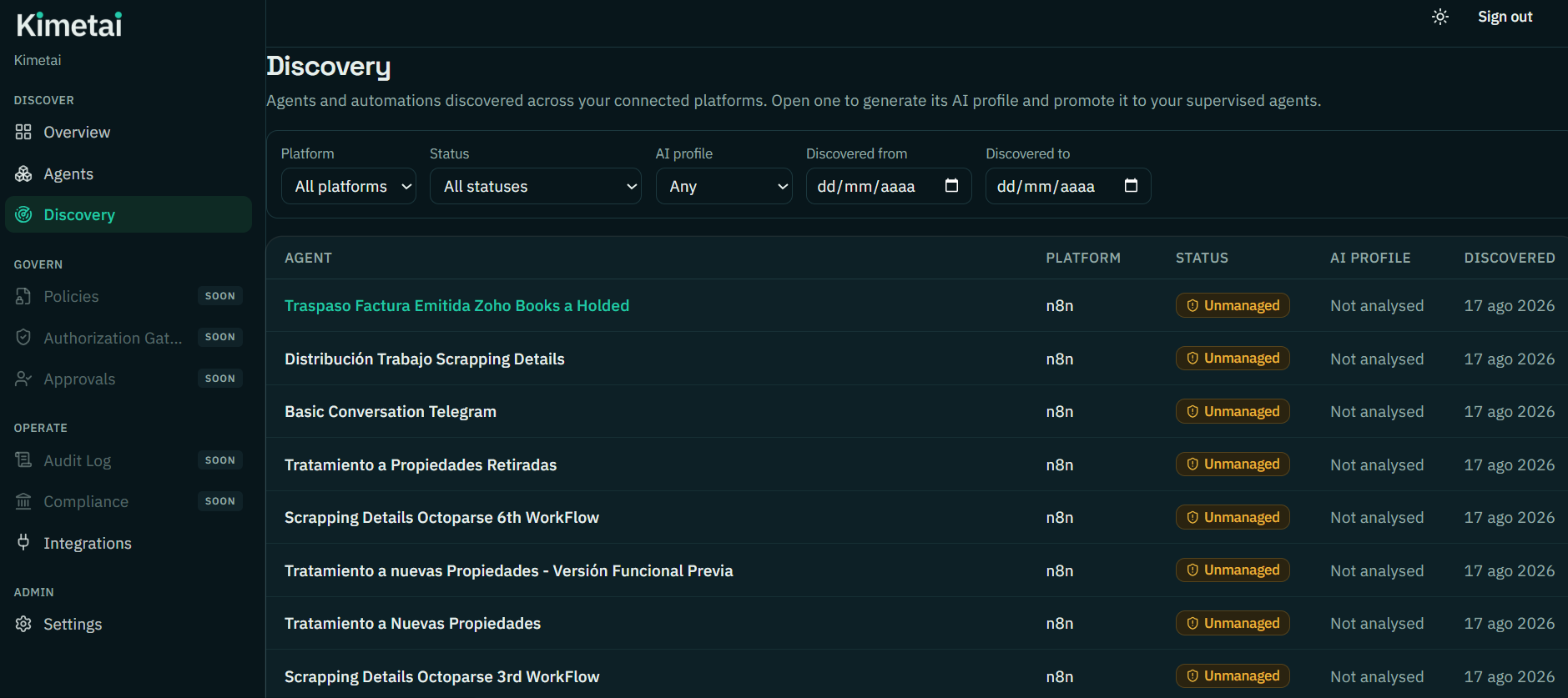
The filters help you find what you are after: by platform, by governance status, by whether it already has an AI profile, or by the date it was added to Kimetai — useful for reviewing exactly what appeared after the last sync.

Analyse it with a single button
Open the automation and click Analyze with AI. You do not need to dig into the platform where it was orchestrated, read its nodes one by one, or ask the person who built it — which is just as well, because that person has often left the company.
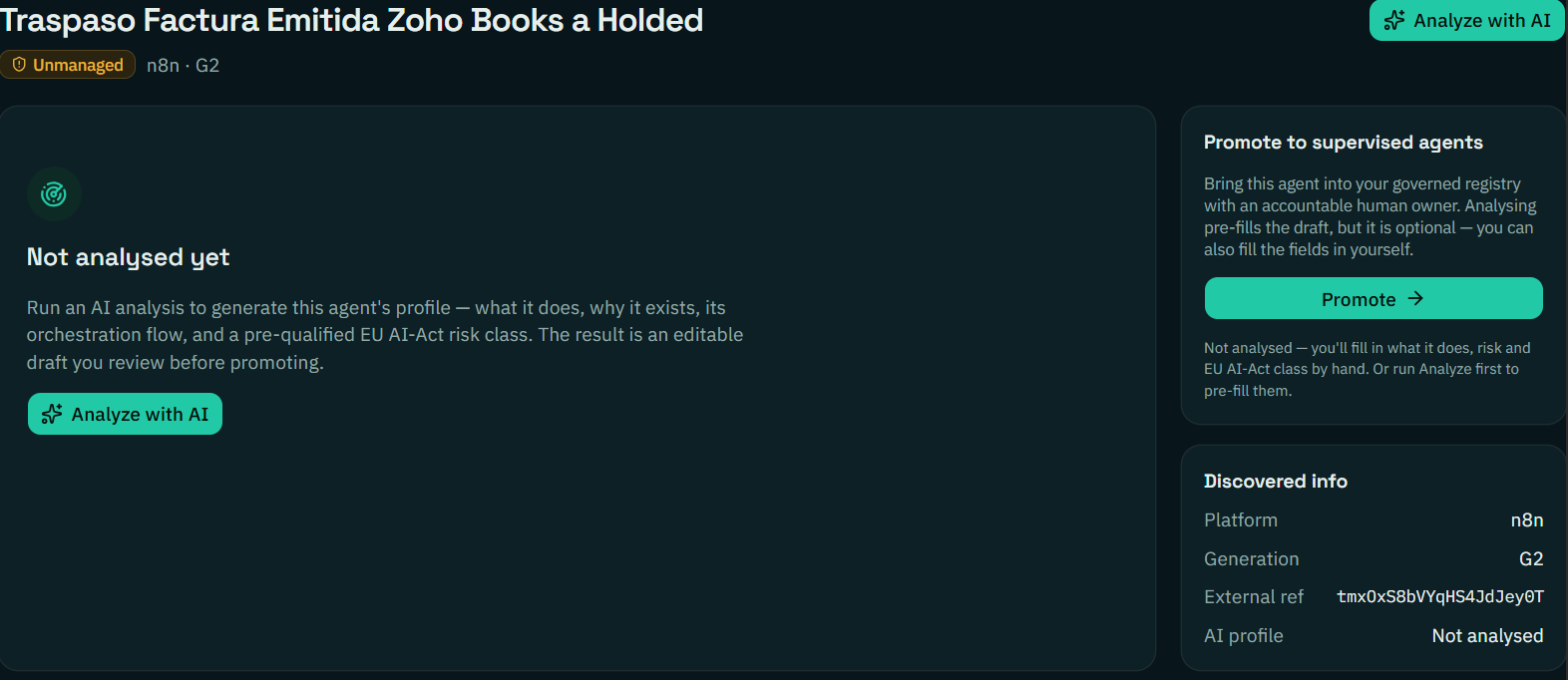
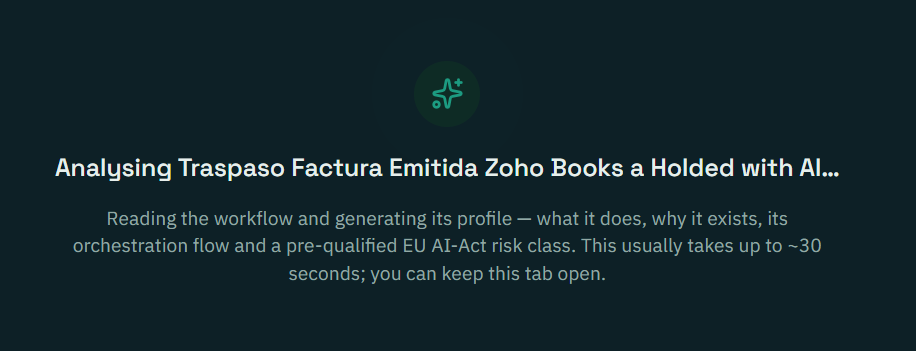
Kimetai reads the automation and generates its profile in under two minutes: what it does, why it exists, its orchestration flow, and a pre-qualified risk surface against the regulation you have told us applies to your business.
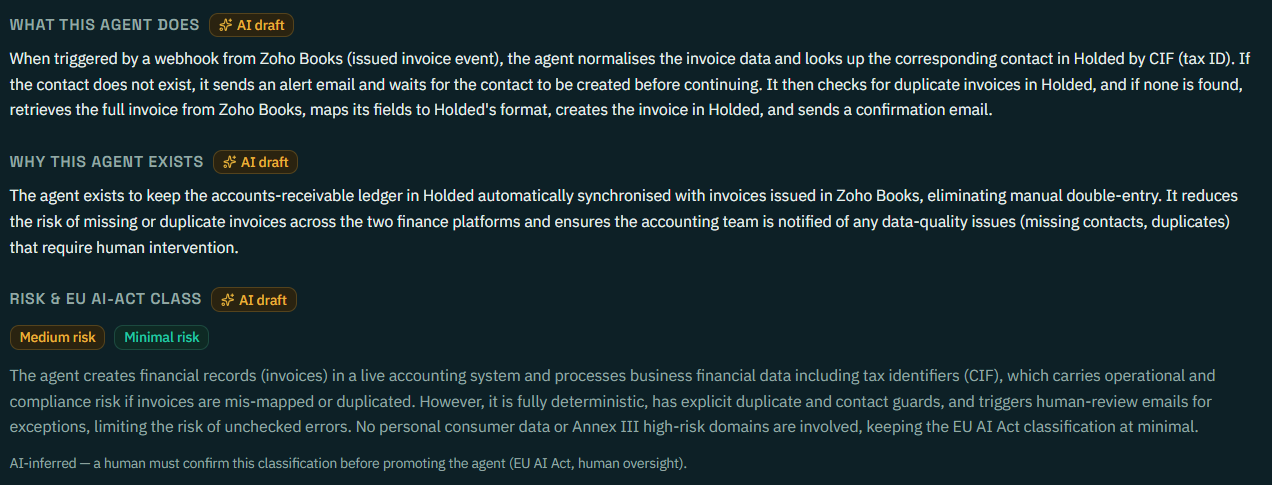
The orchestration flow is the part that pays for itself at audit time: the trigger that fires it, the guards it goes through and every application it acts on, each one named. That is your digital inventory being captured systematically instead of reconstructed from memory the week an inspection lands.
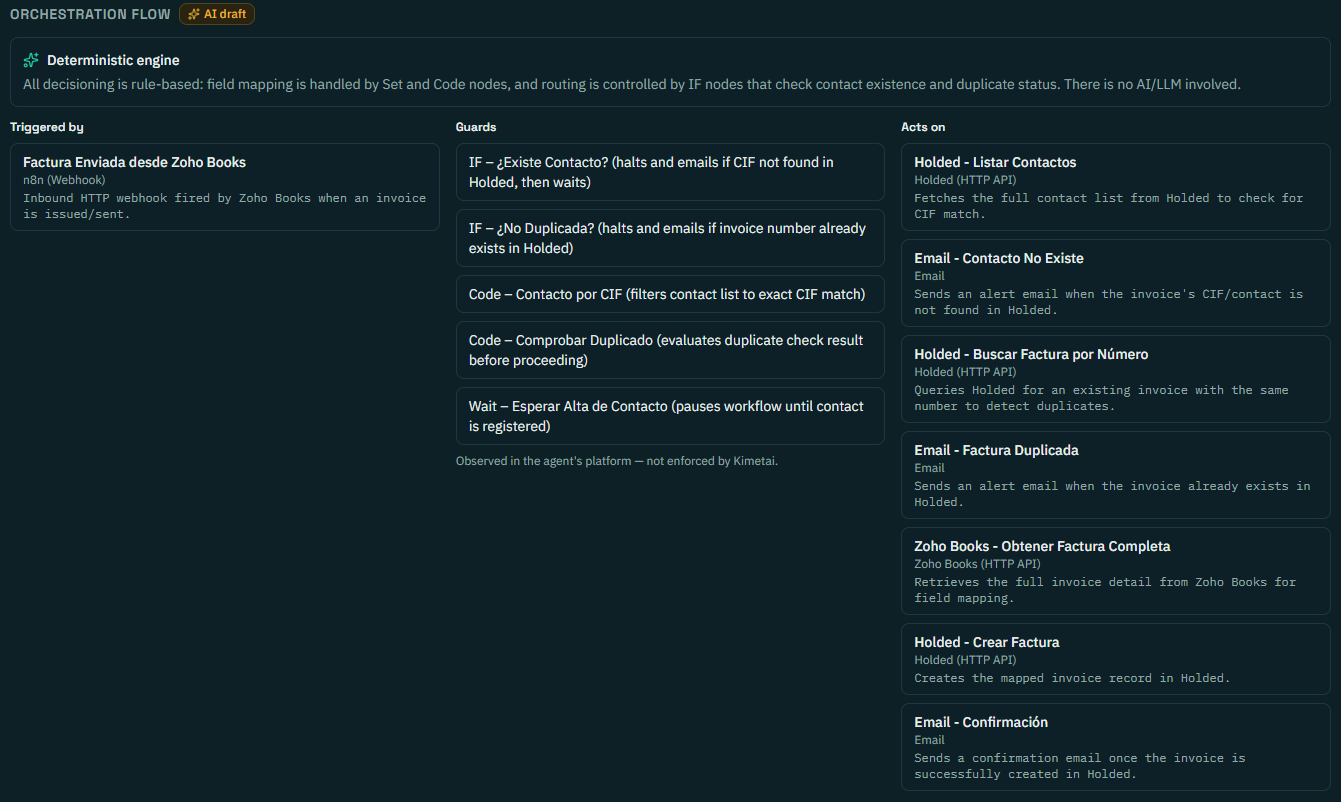
The analysis is a draft, and it says so on every block. It is AI-inferred, and a human has to confirm the classification before the automation can be promoted — that is exactly what Art. 14 of the AI Act means by human oversight.
Promote it to a governed automation
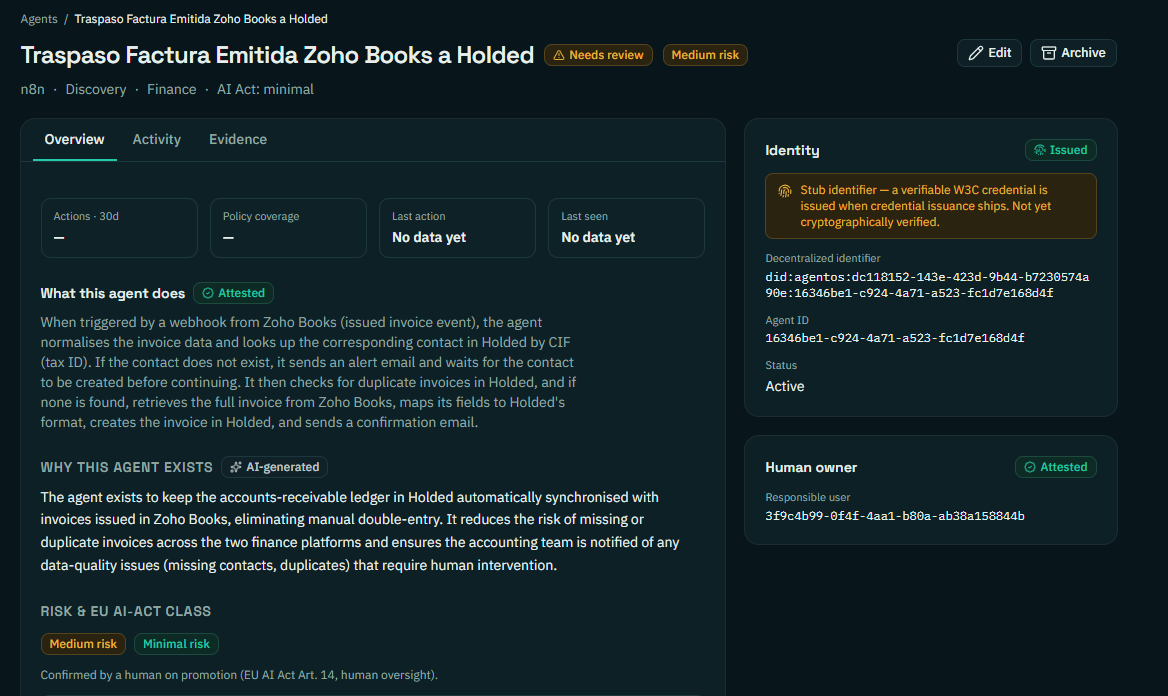
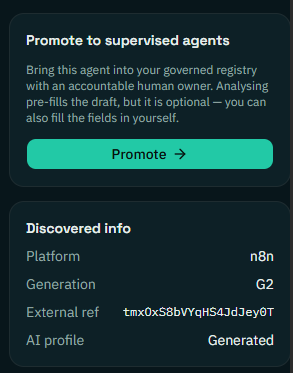
With the automation identified, click Promote. Analysing pre-fills the draft, but it is optional: you can also fill the fields in by hand if you would rather not run the analysis.
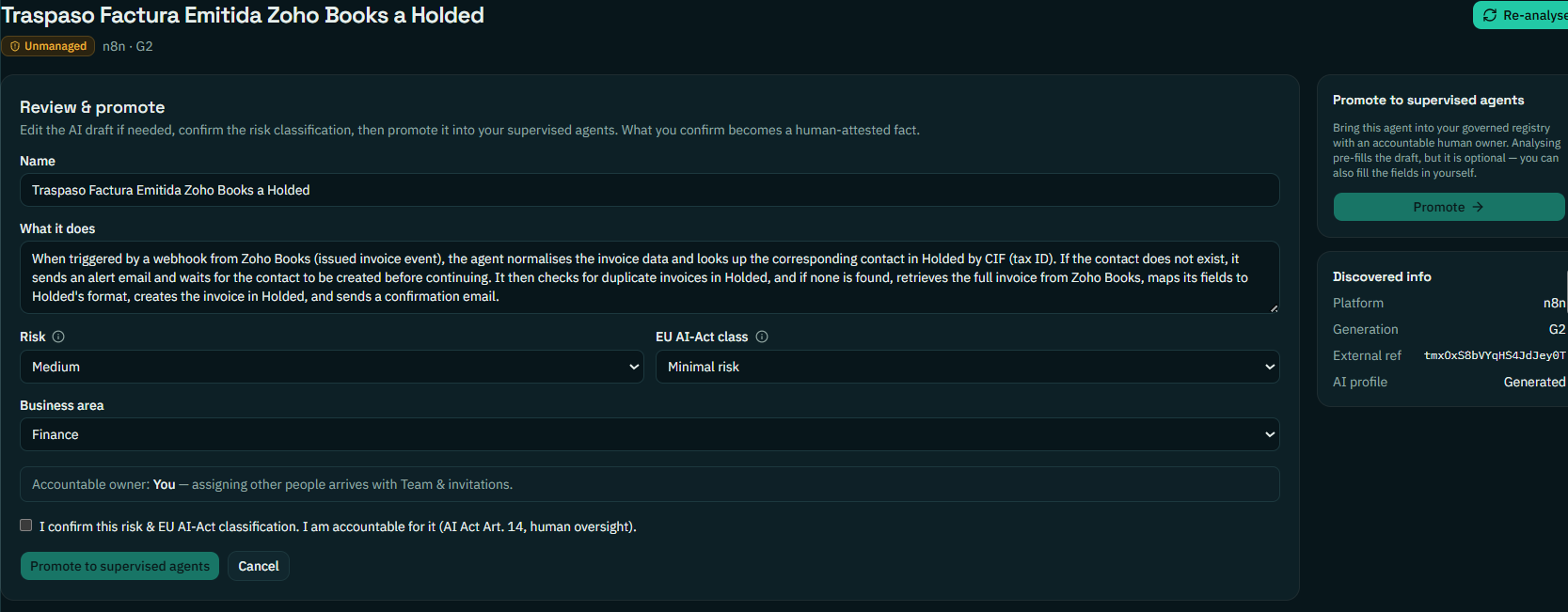
Review and adjust what the draft proposes — the description, the risk level, the EU AI Act class, the business area — and confirm the accountable human who answers for the process. What you confirm stops being an AI guess and becomes a human-attested fact.
From that moment the automation has a unique identifier and its own governed record, and Kimetai adds the layer that Discovery alone cannot give it: supervision, policies and traceability of its interactions. This is where the inventory stops being a list and starts being a control.